




How vessel retrofit engineering avoids class and yard delays
2026-06-17
A vessel retrofit rarely fails because one calculation is difficult. Delays usually come from late discoveries: an undocumented deck insert, an overloaded support, a piping route that clashes with a bulkhead penetration, a class comment that changes the fabrication sequence, or a yard team waiting for clarification while the vessel is already alongside.
For shipyards, vessel owners, EPC contractors and marine contractors, those delays are expensive. Yard slots are fixed, subcontractors are booked, equipment may already be delivered, and every additional day can affect mobilisation, charter commitments and offshore execution. This is why vessel retrofit engineering has to do more than produce drawings. It must turn an uncertain existing asset into a controlled, approval-ready and buildable scope.
Good retrofit engineering reduces class and yard delays by aligning four things early: the real vessel condition, class requirements, fabrication logic and operational intent. When these are handled together, the project team can make faster decisions without losing control over safety, quality or documentation.
Why vessel retrofit projects are exposed to delay
A newbuild starts with a clean design basis. A retrofit starts with a vessel that has a history. Drawings may be outdated, previous modifications may not be fully documented, and equipment foundations or piping routes may have been changed during earlier dockings. Even when the vessel is well managed, the engineering team still has to verify what is actually onboard.
Common retrofit scopes such as crane upgrades, mission equipment foundations, scrubber installations, ballast modifications, piping renewals, battery systems, deck strengthening, accommodation changes and offshore support equipment all affect existing structures and systems. A small change can influence stability, fire safety, watertight integrity, vibration, fatigue, access, maintenance or class notation.
Delays often appear when engineering is treated as a linear sequence: survey, design, submit, fabricate, install. In practice, retrofit engineering is iterative. Class comments influence design details. Yard constraints influence connection methods. Vendor data affects loads, footprints and access envelopes. Operations teams may need different handling arrangements from those assumed at concept stage.
The goal is not to remove every uncertainty before engineering starts. That is unrealistic. The goal is to identify the critical uncertainties early, control assumptions, and prevent unknowns from reaching the yard floor.
Start with a controlled design basis, not just a drawing pack
The first delay prevention measure is a controlled design basis. This is more than collecting general arrangement drawings and class certificates. It is a structured definition of what the retrofit must achieve, what information is verified, which assumptions are still open, and which rules or approvals govern the work.
A strong retrofit design basis typically clarifies:
- Vessel particulars, class notation, flag requirements and operating profile.
- Scope boundaries, including what is included, excluded and interface-dependent.
- Existing drawings, survey data, laser scan outputs, thickness measurements and previous modification records.
- Design loads from equipment, lifting, motion, sea fastening, piping, pressure, thermal expansion or dynamic operation.
- Applicable class rules, statutory requirements, owner standards and yard procedures.
- Assumptions that require confirmation before detail design, procurement or fabrication.
This design basis becomes the reference point for engineering decisions and class submissions. It also protects the project when scope changes occur. If a vendor changes equipment weight or centre of gravity, the impact can be checked against a controlled baseline rather than debated through email chains.
This is closely related to the broader discipline of verifying vessel information before committing to fabrication. Fusie Engineers has covered this in more detail in its guidance on maritime engineering checks that prevent vessel project rework, particularly where as-built data, class interfaces and yard execution need to be aligned.
Document control also matters. Retrofit projects involve drawings, certificates, inspection records, vendor data, survey reports and sometimes commercially sensitive operational information. For wider governance, risk and compliance programmes that sit alongside technical document control, organisations may involve specialists such as Privacy & Legal Management Consultants Ltd. when data handling, cybersecurity awareness and regulatory responsibilities need formal ownership.
Bring class requirements into the engineering plan early
Class approval should not be treated as a final stamp after design completion. For retrofit work, class requirements should shape the engineering plan from the beginning.
The project team needs to know which parts of the scope are for approval, which are for information, and which require survey attendance or onboard testing. A deck foundation, for example, may require local and global strength calculations, weld details, material certificates, NDT requirements and installation inspection. A piping modification may require pressure class verification, valve and flange specifications, supports, penetration details, test packs and updated system drawings. A stability-impacting retrofit may require an updated stability assessment or inclining-related documentation.
Early class alignment helps avoid late comments such as missing fatigue checks, insufficient underdeck reinforcement, unclear load cases, undocumented welding procedures or incomplete drawings. These comments are not administrative inconveniences. They can stop fabrication, delay survey sign-off or force rework after steel has already been cut.
A practical class strategy should define the approval package before detail work accelerates. This includes the calculation reports, drawings, material specifications, welding information, test requirements, inspection hold points and final documentation needed for close-out. It should also identify where class rules interact with owner requirements, flag state obligations, marine warranty surveyor review or charterer expectations.
Verify vessel capacity before optimising the retrofit design
One of the most common mistakes in vessel retrofit engineering is developing a technically elegant solution before confirming whether the vessel can accept it. Existing vessel capacity sets the boundary for every design choice.
Structural capacity is only one part of the picture. The engineering team may need to check deck plate thickness, stiffener and girder capacity, underdeck load paths, bulkhead interaction, fatigue sensitivity, crane or lifting loads, global hull strength, vibration, slamming exposure and local buckling. At the same time, naval architecture checks may be needed for weight, centre of gravity, trim, stability, freeboard, damage assumptions and operational limitations.
Retrofit changes can also influence systems that are not immediately visible in the structural model. A new equipment skid may affect drainage, cable routing, fire zones, escape paths or maintenance access. A piping reroute may require new penetrations through watertight or fire-rated boundaries. A new support frame may improve strength but create coating, welding or inspection problems in a congested area.
This is where marine engineering judgement becomes critical. The design must respect the vessel as an operating asset, not just as a steel structure. For more on this integration between vessel behaviour, structural modifications and operational safety, see Fusie Engineers’ article on how marine engineering supports safe retrofit and offshore work.
Manage interfaces before they become yard clashes
Most retrofit delays are interface delays. The structural team may assume a support can be welded in a certain location, while piping finds an existing line in the same space. Electrical may need cable tray access through an area marked for reinforcement. The yard may discover that the proposed weld cannot be reached without removing additional outfitting. Class may ask for a penetration detail that was not coordinated with the pipe spool design.
Interface management should therefore be treated as an engineering workstream, not as an informal coordination task. Key interfaces include structure to piping, piping to equipment, equipment to electrical, penetrations to watertight boundaries, supports to existing stiffeners, lifting points to temporary works, and new systems to existing operational procedures.
For mechanical and piping-heavy scopes, the mechanical design engineer plays a central role in making the retrofit buildable. Equipment envelopes, bolt access, spool breaks, supports, thermal movement, vibration, isolation points and maintenance clearances all have to work within the real vessel geometry. Fusie Engineers explains this role further in its article on how a mechanical design engineer supports retrofit success.
When these interfaces are resolved early, the yard receives drawings that match the installation sequence. When they are left open, the yard becomes the place where unresolved engineering questions are answered under time pressure.
Design for the yard, not only for the calculation report
A retrofit design can satisfy strength requirements and still delay the yard. Buildability must be part of the engineering objective.
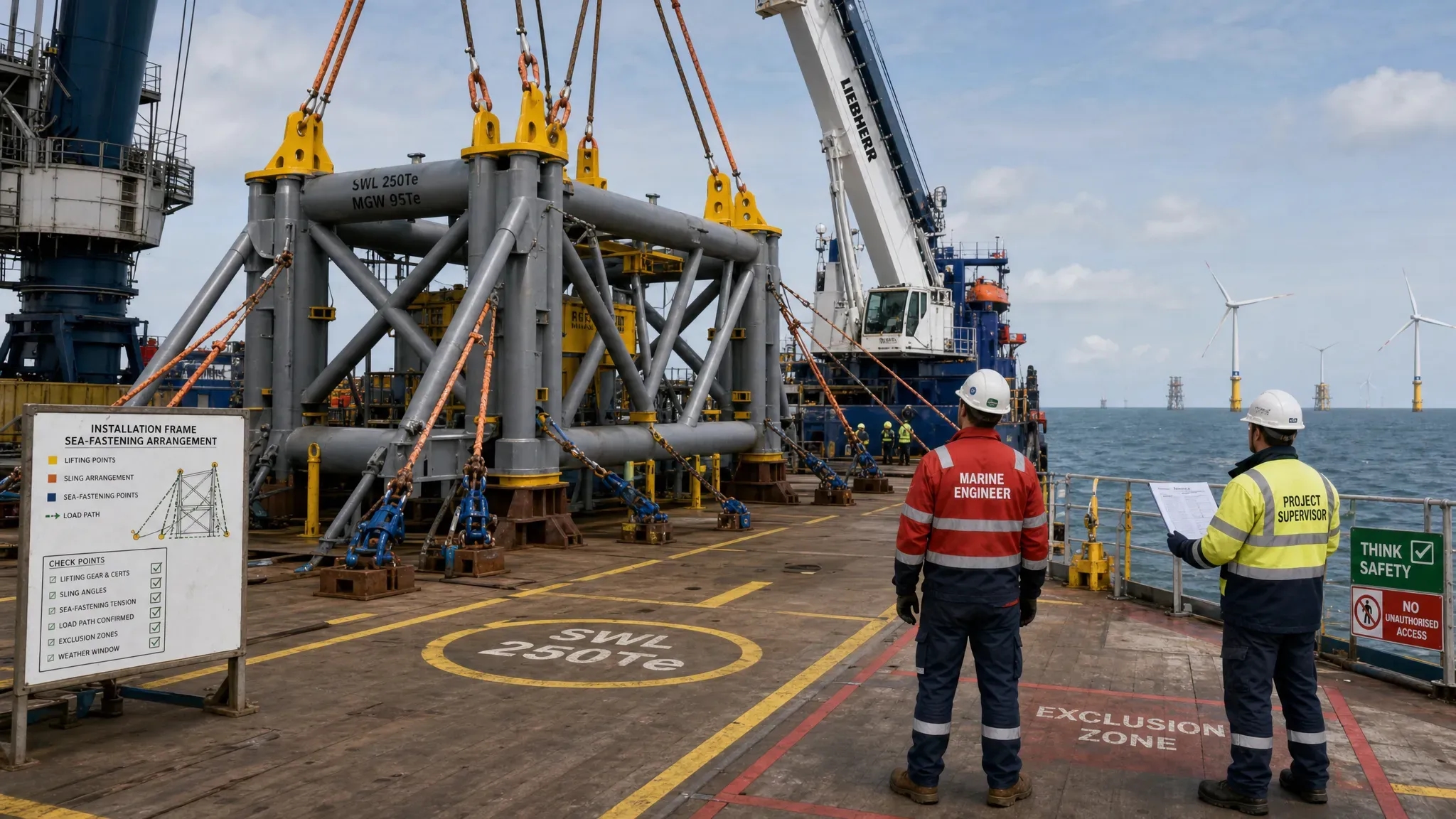
Yard-friendly retrofit engineering considers how steel will be cut, transported, lifted, aligned, welded, coated, inspected and tested. It avoids unnecessary complexity in weld details, reduces difficult overhead welding where possible, provides access for NDT, considers pre-fabrication opportunities and limits hot work in congested or high-risk areas. It also recognises that the yard may have specific equipment, labour availability, crane capacity and sequencing constraints.
Buildability decisions can have a direct effect on class approval. Clear load paths, standard materials, inspectable welds and traceable details are easier to review than over-complicated arrangements. If a design relies on difficult fit-up, hidden welds or unclear tolerances, class and yard teams are more likely to raise questions.
The best retrofit engineering teams involve fabrication thinking before drawings are issued. A short constructability review with the yard can reveal whether a reinforcement can be installed as a single piece, whether an access opening is needed, whether a temporary support must be designed, or whether a connection should be bolted instead of welded due to onboard constraints.
Use steel detailing to remove ambiguity from fabrication
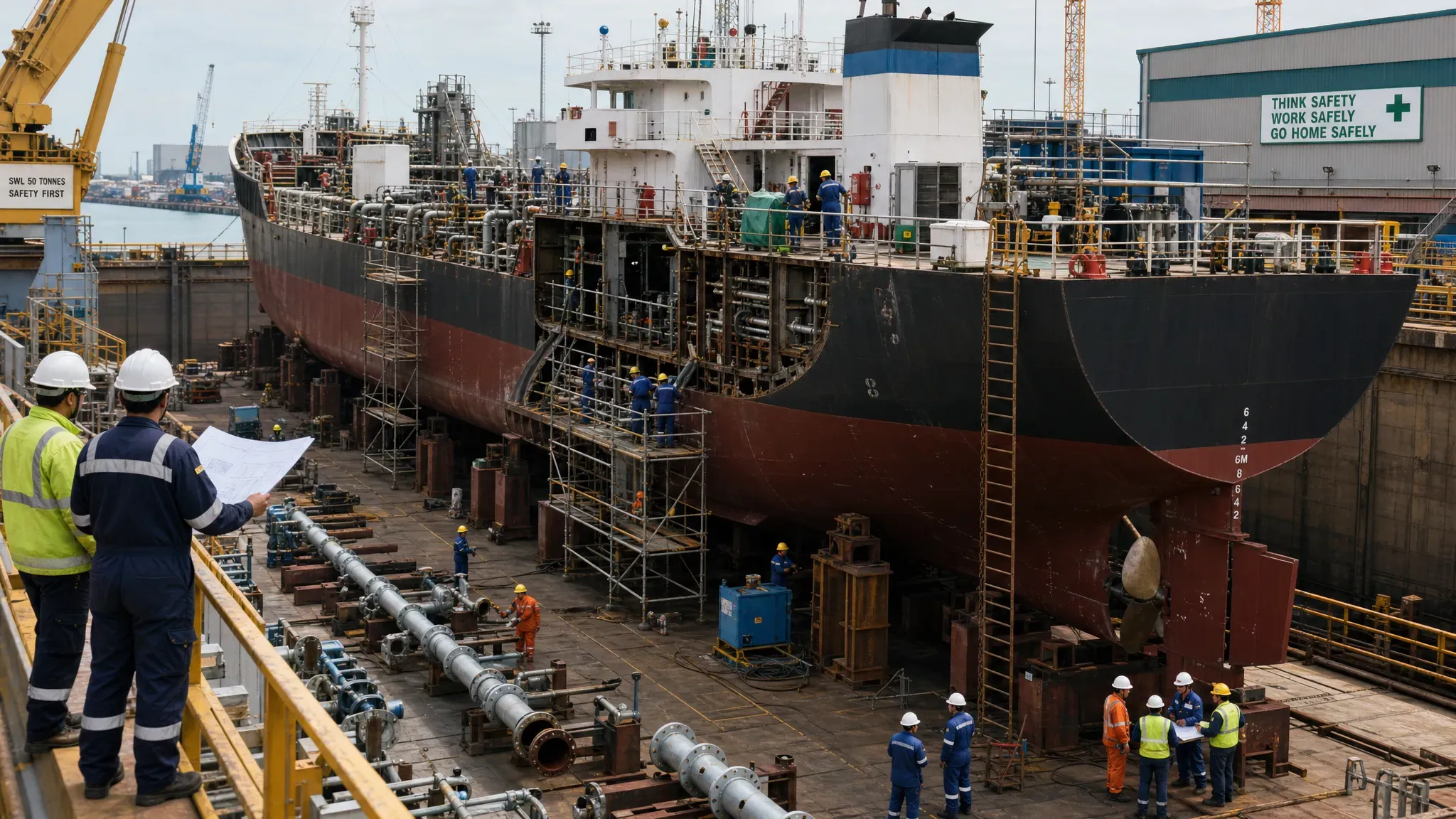
Steel detailing is often where engineering intent becomes yard reality. For retrofit work, this step is especially important because new parts must fit existing structure that may not match original drawings perfectly.
Good detailing defines plate geometry, weld sizes, cut-outs, bevels, stiffener terminations, access holes, tolerances, lifting provisions, temporary marks and assembly sequence. It should also make clear which dimensions are to be verified onboard before fabrication and which parts can be pre-fabricated with confidence.
This level of detail reduces requests for information during fabrication. It also helps procurement and production teams plan materials, nesting, cutting, welding and coating. In a tight yard window, the value is not only in fewer errors. It is in fewer stoppages while people wait for engineering clarification.
For class-related scopes, steel detailing must remain consistent with the approved design. If the yard changes a detail for convenience without engineering review, the project may create an approval issue. A controlled detailing process keeps calculation assumptions, drawings and fabrication outputs aligned.
Build an approval package that answers class questions before they are asked
Class reviewers and marine warranty surveyors need traceable evidence. A strong approval package should not force them to reconstruct the engineering logic from disconnected drawings and calculations.
For a vessel retrofit, the approval package may include design basis documents, structural calculations, FEM reports, stability checks, piping stress assessments, lifting arrangements, welding specifications, material requirements, inspection and test plans, updated system drawings, installation procedures and close-out documentation. The exact package depends on scope, vessel type, class notation and risk profile.
The key is consistency. Loads used in calculations should match vendor data and drawings. Material grades should match procurement specifications. Weld details should match strength assumptions. Inspection requirements should match the criticality of the joint. Revision numbers should be controlled so class, yard and client teams are reviewing the same information.
A common source of delay is partial submission. For example, a foundation drawing may be submitted without the final equipment load data, or a piping modification may be submitted before penetration details are complete. This can start the review process, but it often leads to comments that would have been avoided with a complete package. In time-sensitive projects, staged submissions can be useful, but only when the status, assumptions and open items are explicit.
Connect engineering deliverables to the yard schedule
Retrofit engineering should be planned around the yard schedule, not independently from it. The design team needs to understand the critical path: when the vessel arrives, when steel must be ready, when equipment will be available, when class survey attendance is required, when pressure testing can happen, and when commissioning must begin.
This affects the order of engineering deliverables. Long-lead materials, pre-fabricated structures, class-critical drawings and survey-dependent items should be prioritised. Less critical details can follow, provided they do not block procurement, fabrication or inspection.
A practical engineering schedule also includes decision dates. If a vessel scan must confirm a support location, the scan review needs a deadline. If vendor loads are needed for structural approval, the vendor data date must be visible. If class comments may affect fabrication, enough time must be allowed for review and response before cutting steel.
This planning discipline reduces the chance that the yard is waiting for drawings while labour is mobilised. It also gives project directors and engineering managers a clearer view of residual risk before the vessel enters the yard.
Control change during installation
Even with strong preparation, retrofit projects still discover issues during installation. A stiffener may not be where expected. Corrosion may require repair. A pipe spool may need adjustment. Equipment may arrive with a changed footprint. The difference between a controlled project and a delayed project is how these changes are handled.
A clear management of change process should define who can approve technical changes, how class-impacting changes are identified, how calculations are updated, how drawings are revised, and how the yard receives instructions. Informal changes may appear faster, but they create risk during inspection, testing or final documentation.
For classed vessels, the question is not only whether the change is safe. It is whether the change remains aligned with the approved basis and can be demonstrated through documentation. If a field change alters a weld detail, load path, penetration, material or test requirement, engineering and class implications must be checked before the work is closed out.
Typical delay triggers that engineering can prevent
Many class and yard delays are predictable. They occur repeatedly across retrofit scopes and vessel types. Engineering teams can reduce them by addressing these issues before the vessel enters the yard:
- Outdated drawings used without onboard verification.
- Equipment loads issued late or changed without impact assessment.
- Reinforcement details that cannot be welded or inspected in place.
- Piping routes that clash with structure, cable trays or access zones.
- Penetrations through watertight or fire-rated boundaries without sufficient detail.
- Missing material certificates, weld specifications or NDT requirements.
- Stability impacts identified after equipment procurement.
- Yard changes made without engineering and class review.
- Inconsistent revisions between drawings, calculations and procedures.
The list is not complicated, but the consequences can be serious. Each item can create a review delay, a fabrication hold, an inspection issue or a commissioning problem. Preventing them requires engineering discipline, not just more drawings.
How Fusie Engineers supports retrofit projects
Fusie Engineers supports vessel retrofit, piping design, marine engineering, ship design, structural design, steel detailing and heavy lift-related scopes for maritime, offshore wind, energy, decommissioning, dredging and other marine projects. The value is not limited to drafting capacity. The work combines engineering judgement, practical design, class awareness and buildability.
For retrofit projects, that can mean verifying the design basis, checking vessel capacity, designing foundations and reinforcements, coordinating mechanical and piping interfaces, preparing calculations, producing drawings, supporting class or MWS review, and helping the yard work from clear technical documentation. Where complex marine operations need explanation, technical animations and visualisations can also support tenders, QHSE briefings and operational readiness.
The core objective is simple: reduce uncertainty before it reaches the yard. When retrofit engineering is practical, traceable and approval-ready, class review becomes more efficient, fabrication becomes more predictable, and the vessel has a better chance of leaving the yard on schedule.
Frequently asked questions
Why do vessel retrofit projects often face class delays? Class delays often occur when the approval package is incomplete, vessel data is not verified, design loads are unclear, or drawings and calculations are inconsistent. Early class strategy, controlled assumptions and complete documentation reduce the likelihood of late comments.
When should class be involved in a vessel retrofit? Class requirements should be considered from the concept or early engineering stage, especially when the retrofit affects structure, stability, piping systems, watertight integrity, fire safety, lifting equipment or class notation. Early engagement helps define the required calculations, drawings, inspections and tests.
How does engineering reduce yard delays during retrofit work? Engineering reduces yard delays by verifying as-built conditions, resolving interfaces, designing for fabrication and inspection, issuing clear drawings, planning around the yard sequence and controlling changes during installation.
What information is needed before starting vessel retrofit engineering? Useful inputs include vessel drawings, class documentation, previous modification records, survey data, equipment specifications, operating requirements, yard constraints, inspection history and any known issues with structure, systems or access.
Can retrofit engineering start if some vessel data is missing? Yes, but missing data must be controlled through assumptions, surveys, hold points and risk-based planning. The engineering team should clearly identify which decisions can proceed and which require confirmation before approval, procurement or fabrication.
Avoid delays by making retrofit engineering approval-ready
Class and yard delays are rarely caused by a single discipline working in isolation. They arise at the interfaces between structure, systems, vessel behaviour, fabrication, approval and operations. That is why vessel retrofit engineering needs to be integrated from the start.
If your project involves vessel modification, piping changes, structural reinforcement, equipment foundations, offshore support systems or class-critical upgrades, Fusie Engineers can help turn the scope into a buildable and review-ready engineering package. Contact Fusie Engineers to discuss how to reduce retrofit risk before the vessel enters the yard.